There is no notification when someone blocks you, and no setting that tells you. Both Apple and Google designed it that way on purpose, because a block that announced itself would put the person who blocked you in a worse position than before.
What you get instead is a set of signs. Each one has an innocent explanation on its own. Together, and repeated over a few days, they get close to an answer.
Below is what each sign actually means, what it does not mean, and the one test that comes closest to certainty.
Start Here: Nothing Is Conclusive
Every page that promises a definite method is overstating it. A phone that is switched off, in airplane mode, out of signal, or set to a Focus mode produces several of the same symptoms as a block.
So the honest approach is to look for a pattern that persists, not a single event. One call going to voicemail means nothing. Every call going to voicemail for a week, while texts also stop delivering, means something.
The Call Signs
One Ring, Then Voicemail
The most quoted sign. On many networks a blocked call is allowed to ring once at your end before being diverted.
What else causes it: the person declining the call manually, which produces almost the same result. The difference is consistency. A human declines sometimes. A block does it every time, at every hour.
Straight to Voicemail Every Time
No ring at all, immediately voicemail. On some networks this is the blocked behaviour, on others it indicates a phone that is off or has no signal.
The test is time. A phone that is off comes back on. If it has been instant voicemail at nine in the morning, at lunchtime and at nine at night across several days, that is not a flat battery.
A Message Saying the Number Is Unavailable
Some carriers play an automated message rather than diverting to voicemail. The wording varies and it is not a reliable signal on its own, because the same recordings are used for disconnected numbers and network faults.
The Message Signs on iPhone
The Delivered Label Disappears
This is the strongest single sign on iMessage, and it is widely misread.
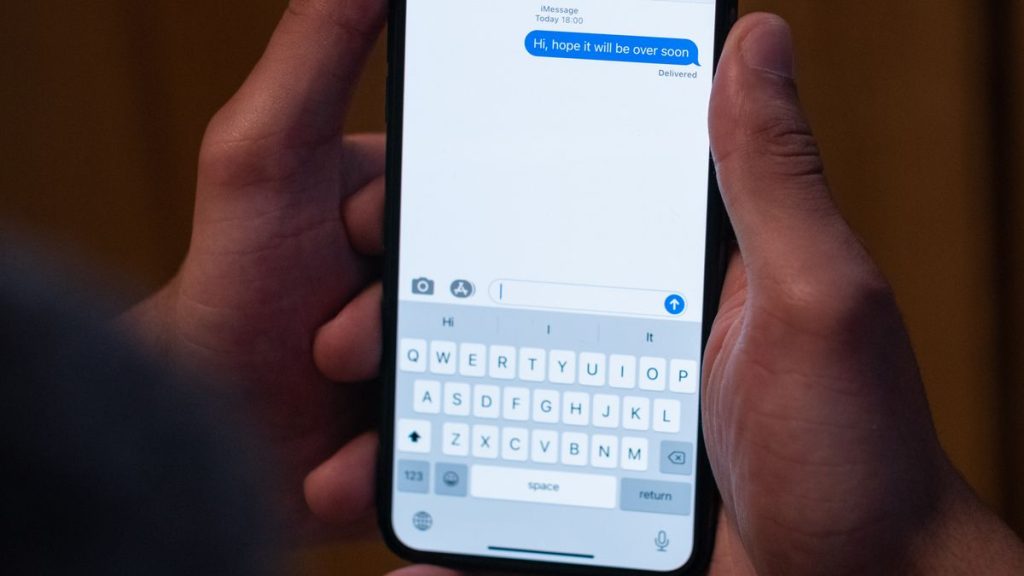
Normally a sent iMessage shows Delivered underneath it. If you have been blocked, the message appears to send, stays blue, and simply never shows Delivered. It does not fail, and it does not tell you anything went wrong.
What else causes it: the recipient has no data connection, their phone is off, or they have turned off read receipts. The first two resolve themselves within a day. If Delivered has not appeared under any message for several days, while the phone is clearly in use elsewhere, that is meaningful.
Blue Turns to Green
A message that used to send as a blue iMessage now sends as a green SMS. People read this as proof of a block and it usually is not.
Green means the message went by SMS instead of over the internet. That happens when the recipient is offline, when iMessage is switched off on their device, or when they have moved to an Android phone. A block on an iPhone does not normally change the colour.
No Typing Indicator, No Read Receipt
Weak signals. Plenty of people turn read receipts off, and the typing indicator only appears when somebody is actually typing. Neither is worth drawing a conclusion from.
The Message Signs on Android
Android is less informative, which cuts both ways.
With RCS, messages show Sent and Delivered much like iMessage, so a message that stops showing Delivered carries similar weight. With plain SMS there is usually no delivery confirmation at all, so there is nothing to read.
A blocked SMS normally looks sent from your side. The network accepts it and simply does not pass it on. You will not get an error.
If you have delivery reports switched on for SMS, a report that never arrives is a mild signal, but reports are unreliable across carriers and should not be treated as evidence.
The Test That Comes Closest
Calling from a different number is the nearest thing to a definite answer, and it needs to be done carefully to mean anything.
- Wait a few days first. Rushing straight to this step produces a false result if the person simply had their phone off.
- Borrow a phone rather than withholding your caller ID. A withheld number behaves differently on many systems and some people block unknown numbers by default, which muddies the result.
- Call at a normal hour when the person is likely to be available.
- Compare. If the borrowed phone rings properly and yours goes to voicemail instantly, at the same time of day, that is as close to confirmation as this gets.
One caution worth stating plainly. If someone has blocked you, calling from another number is working around a decision they made deliberately. Knowing is one thing; repeatedly contacting them through other routes is another, and in some circumstances it stops being a question about technology.
What a Block Actually Does
Understanding the mechanics explains why the signs look the way they do.
- Calls are diverted before the recipient’s phone rings. They are not notified.
- Texts are accepted and discarded. The sender sees a normal sent message. The recipient never sees it, and will not see it if the block is lifted later.
- Nothing is deleted. Old conversations stay on both phones.
- It is per device or per account, depending on the platform, rather than a network level ban. Blocking on a phone does not block the same person on a separate messaging app.
- Group chats still work in many cases. Two people who have blocked each other can both be in the same group and see the same messages.
That last point surprises people and it is the most common way somebody discovers they were blocked, rather than through any of the tests above.
Other Apps Behave Differently
If most of your contact was through an app rather than through calls and texts, look there instead, because the signs are clearer.
- WhatsApp: profile photo disappears, last seen and online stop showing, messages stay on one tick, and calls do not connect. Several of these together is a strong indicator.
- Instagram and similar: the profile usually becomes unfindable from your account while remaining visible from another.
- Signal and Telegram: deliberately vague, for the same reason the phone platforms are.
No app confirms it outright. Each one has decided, as the phone platforms have, that a clear signal would create more problems than it solves.
Before You Conclude Anything
A short list of things that produce identical symptoms and are far more common than being blocked.
- Focus or Do Not Disturb, which silences calls and can divert them.
- A phone that is off, charging overnight or out of signal.
- A changed number, which produces instant voicemail or an unobtainable message.
- Carrier spam filtering, which can silently stop messages from numbers it does not trust.
- A full voicemail box or a service fault.
- Read receipts switched off, which removes a signal you may have relied on previously.
A Week by Week Way to Check
If you want a method rather than a list of signs, this is the order that produces the fewest false conclusions.
- Day one: do nothing. Resist the urge to test. A single unanswered call or undelivered message carries no information at all.
- Day two: send one message and note the time. Check later whether Delivered ever appeared. Do not send several, which tells you nothing extra and reads badly if you were not blocked.
- Day three: call once, at a normal hour. Note whether it rang at all, how many times, and whether voicemail picked up immediately.
- Day four: check another channel. If you share a messaging app, the signs there are clearer than on calls and texts.
- Day five: look for independent evidence. A group chat you are both in, a mutual contact who has heard from them, anything that shows the phone is in normal use.
- Day six or seven: the borrowed phone test, once, if you still need to know.
By the end of that week you will usually have an answer, and you will have avoided the two common mistakes: concluding too early from a single symptom, and sending a run of messages that make the situation worse if the person simply had their phone off.
If It Turns Out You Were Blocked
Worth saying plainly, because it is the part most articles skip.
A block is a decision somebody made. It is not a technical fault to be worked around, and the platforms deliberately give you no way to reverse it from your side. There is no setting, no appeal and no workaround that is not simply contacting the person by another route.
If the contact was ordinary and you think it was a mistake, one message through a mutual contact is reasonable. Repeatedly calling from new numbers, making new accounts or reaching them through other people is not, and depending on the circumstances it can amount to harassment regardless of how it started.
If you are the one considering blocking somebody, the same mechanics work in your favour: it is silent, it does not alert them, and it is reversible at any time.
Why the Signs Differ Between Networks
The inconsistency in what people report is real, and it has a cause worth knowing.
Blocking is handled in more than one place. A phone can refuse a call itself, after the network has already set it up. A carrier can refuse it earlier, before your phone ever rings. Some carriers also sell their own blocking service that works differently again from the setting in the phone.
That is why one person swears a blocked call rings once and another is certain it goes straight to voicemail. Both are describing what they saw, on different networks, with blocks applied at different layers.
The practical consequence: do not treat any single carrier specific behaviour as the rule. Compare the same number over several days instead, because the pattern is consistent even when the mechanism is not.
What You Cannot Find Out
Setting expectations, since several of these are things people look for and no method provides.
- When you were blocked. There is no timestamp anywhere.
- Whether they read your earlier messages before blocking.
- Whether the block is on the phone or at the carrier.
- Whether you have been blocked or merely muted. Muting leaves delivery working normally, so from your side it looks like everything is fine and nobody replies.
- Whether an app block and a phone block are both in place, since they are separate settings on separate systems.
Any site offering a service that checks these is selling something that does not work. The information is not exposed to anyone outside the account that set the block.
Frequently Asked Questions
How can you tell if someone blocked your number?
There is no notification and no certain test. The usual signs are calls going to voicemail after a single ring or instantly, and iMessages that never show Delivered. Look for the pattern persisting over several days rather than relying on one event.
Do blocked messages say Delivered?
No. On iMessage a blocked message sends normally, stays blue and never shows Delivered. It does not fail, which is why people miss it.
Does green text mean I am blocked?
Usually not. Green means the message went by SMS rather than iMessage, which happens when the recipient is offline, has iMessage turned off, or has moved to Android. Blocking does not normally change the colour.
What happens to texts I send after being blocked?
They are accepted by the network and discarded. The recipient never receives them and will not receive them later if the block is removed.
Will I know if someone unblocks me?
No, and messages sent during the block do not arrive afterwards. Calls and messages simply start getting through again.
Does calling from another number prove it?
It is the closest test available. Wait a few days first, borrow a phone rather than withholding your number, and call at a comparable time. If the borrowed phone rings while yours goes straight to voicemail, that is close to confirmation.
Can you still be in a group chat with someone who blocked you?
Often yes. Blocking is usually one to one, so both people can appear in the same group and see the same messages. This is how many people find out.
Is it different on Android?
The signs are weaker. With RCS you get Sent and Delivered labels similar to iMessage. With plain SMS there is usually no delivery confirmation, so there is nothing to read.
How do I tell on WhatsApp?
Look for the profile photo disappearing, last seen and online no longer showing, messages staying on one tick and calls not connecting. Several together is a strong indicator, though none is official.
Why do the platforms not just tell you?
Because a clear notification would expose the person who blocked you, which is the situation blocking exists to prevent. The ambiguity is deliberate.
The practical answer: give it several days, watch whether calls and messages both behave the same way the whole time, and if they do, you have your answer without needing to test it.
More messaging guides: what MMS messaging is and why you cannot leave some group chats.